









Weld Discoloration: What the Colors Mean and How to Prove Your Purge with an O2 Meter
If you weld stainless tube for pharma, semiconductor, food or dairy work, the color on the inside of the joint is not cosmetic. It is a report card on your purge. Straw, gold, blue, gray — each step up that scale means more oxygen was in the backing gas while the weld pool froze, and more of the chromium oxide layer that makes stainless “stainless” got burned off.
Here is how to read it, how to prove it with an oxygen meter instead of guessing, and the tools we carry to get you there.
Why heat tint matters
Austenitic stainless (304L, 316L) resists corrosion because of a thin, self-healing chromium oxide film on the surface. Weld it with oxygen present and that film thickens into visible heat tint, and the metal directly under the tint is left chromium-depleted. That depleted layer is where pitting and crevice corrosion start, and in a high-purity system it is also where product can hang up.
That is why customer specs in pharma, biotech and semiconductor work call out a maximum discoloration level on the tube ID, and why a rejected weld is not just ugly — it is a cut-out, a re-prep, a re-weld and a schedule hit.
The discoloration levels, and what they mean in ppm
AWS D18.2, Guide to Weld Discoloration Levels on the Inside of Austenitic Stainless Steel Tube, is the industry reference. It uses ten numbered samples, each welded with a known amount of oxygen in the purge gas:
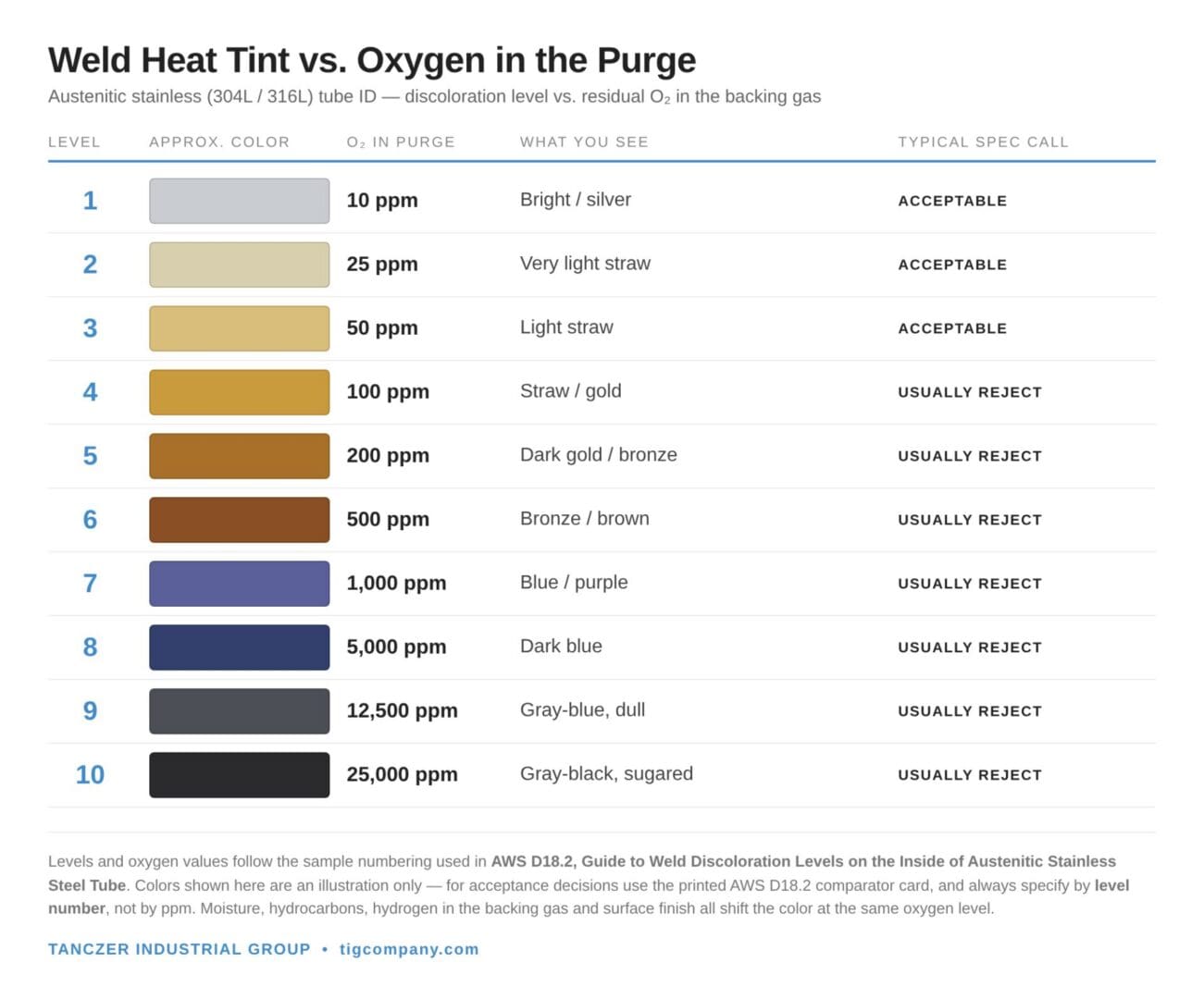
Three things worth knowing about that chart:
- Specify by level number, not by ppm. The color at a given oxygen level shifts with moisture in the gas, hydrocarbons left on the surface, hydrogen in the backing gas and the tube’s surface finish. Two shops at the same 50 ppm can produce different-looking welds.
- Most specs land around level 3 or better for high-purity work, with level 4 and up rejected unless the customer has agreed otherwise. Know your customer’s number before you strike an arc.
- Buy the real card. The graphic above is an illustration. For accept/reject calls, use the printed AWS D18.2 comparator sheet under decent light — it exists precisely because screens and memory lie about color.
Stop guessing: check the purge with an O₂ meter
The most common way shops end up with gold and blue welds is purging by feel — “give it two minutes and go.” Tube volume, fitting geometry, how leaky your dam is and how long the line sat open all change the answer. An oxygen analyzer turns that into a number.
How to do it properly:
- Sample at the outlet, downstream of the joint. If you sample near the gas inlet you are measuring your bottle, not your weld zone.
- Wait for the number, not the clock. Purge until the reading is at or below your target, then start. On a fresh setup, note how long it actually took — that becomes your real purge time for that size and configuration.
- Keep monitoring during the weld. Oxygen creeps back in through a slipping dam, a loose fitting or a back-filling open end. A reading that was good at start-up is not proof it stayed good.
- Know your meter’s floor. A percent-range monitor is fine for structural and general stainless work. High-purity welds specified at single-digit or low tens of ppm need a trace-level analyzer — typically a zirconium-sensor instrument — or you are flying blind below its resolution.
- Log it. On pharma and semi jobs the oxygen reading belongs in the weld record next to the coupon. It is the cheapest documentation you will ever produce and the first thing a client asks for when a weld is questioned.
The meters we carry
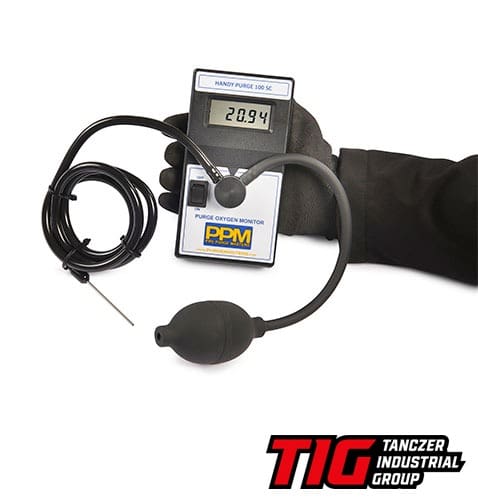
PPM (Pipe Purge Masters) Handy Purge 100 Self-Calibrating Weld Purge Monitor. Part number HP100SC. Self-calibrating, battery powered, measuring range 0.01% to 20.9% oxygen (100 ppm to 209,000 ppm). Compact, rugged, works with any purge or argon welding setup. It is the right tool when the job is “get the air out and confirm it” rather than a trace-ppm spec. PPM is part of the S.F.E. Group, the same group behind AXXAIR.
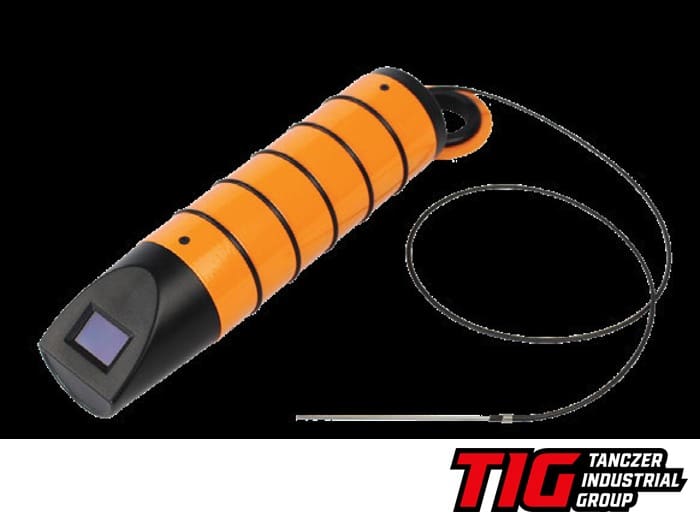
Orbital Service PRO2 Stick Oxygen Analyzer. Measuring range 1,000 ppm down to 1 ppm, ready to measure in about five seconds, and you start it by shaking it — no menu diving with gloves on. Not sensitive to hydrogen, humidity or ozone, which matters if you run an argon-hydrogen backing gas. 11-hour battery, auto-rotating display, Bluetooth class 1 so it can talk to a CompactOne power supply or a wireless remote.
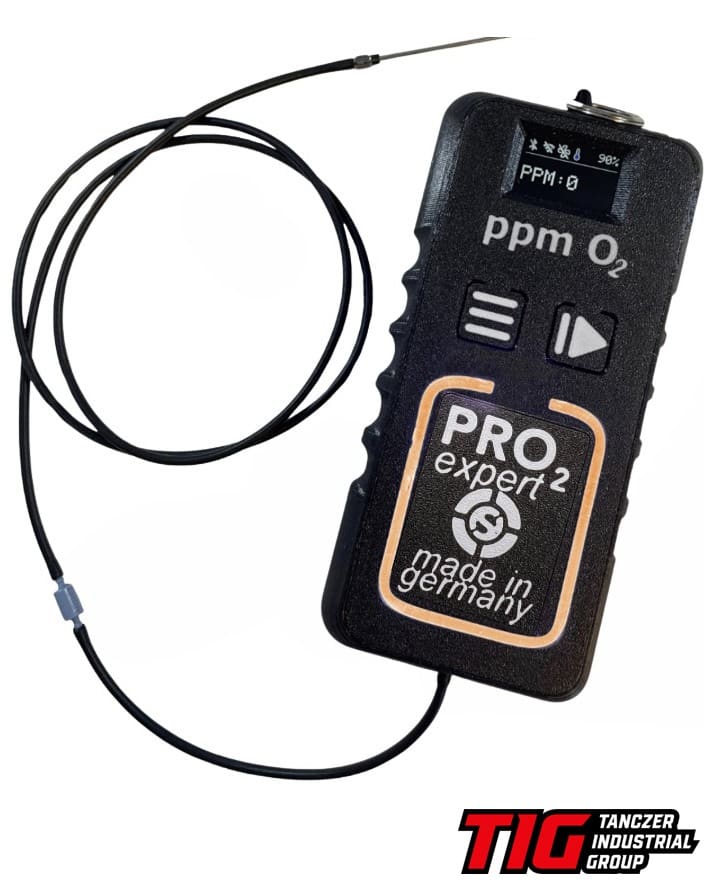
Orbital Service PRO2 Expert Oxygen Analyzer. Wear-proof zirconium sensor, ready in about 60 seconds, USB-C charging (a shop power bank will run it), color and audible indication of operating status, and a diffusion-tight FPM sample line so the hose itself is not leaking oxygen into your reading. Dry gases only. This is the one for trace-level, documented high-purity work.
Not sure which one your spec actually requires? Call us with the spec and the tube size — that is a five-minute conversation, not a sales pitch.
Purge tools: getting the oxygen out in the first place
A meter tells you the truth. Purge tooling is what makes the truth good news. From PPM we carry:
- Weld purge plugs — the fastest way to seal small-bore tube, fittings, elbows and tees. Where an inflatable system or a paper dam does not fit or is overkill, plugs give you a tight, reusable seal and a small purge volume. Small purge volume means less gas, less time, and a lower reading sooner.
- Inflatable purge bag systems and formed double-seal purge systems — for larger pipe, these dam off a short section either side of the joint so you are purging a few liters instead of the whole run.
- The Rapid PURGE system for large-diameter pipe, 8″ to 80″, built to get a big line under 0.1% oxygen in minutes rather than hours.
The math is simple: the smaller the volume you have to purge, the faster you hit your number, the less argon you burn, and the fewer welds you cut out.
When the purge problem is not simple
Some jobs will not cooperate. Long runs with no clean place to dam. Complex assemblies with a dozen open ports. Vessels and headers where the gas short-circuits and leaves a dead zone right where the joint is. Titanium and other reactive metals where the acceptance window is much tighter than stainless.
That is the kind of problem we solve regularly. If you have a purge you cannot get under spec, get in touch — call (720) 840-5173 or email ltanczer@tigcompany.com. Tell us the material, the size, the geometry and the discoloration level you are being held to, and we will tell you what setup will actually hit it.
Your turn
What discoloration level are your customers holding you to, and what do you purge down to before you strike an arc? Drop it in the comments — especially if you have a purge setup that saved you on a job nobody thought could be done clean. We read every one.